
Mary Stork
English ( b.1938 - d.2007 )
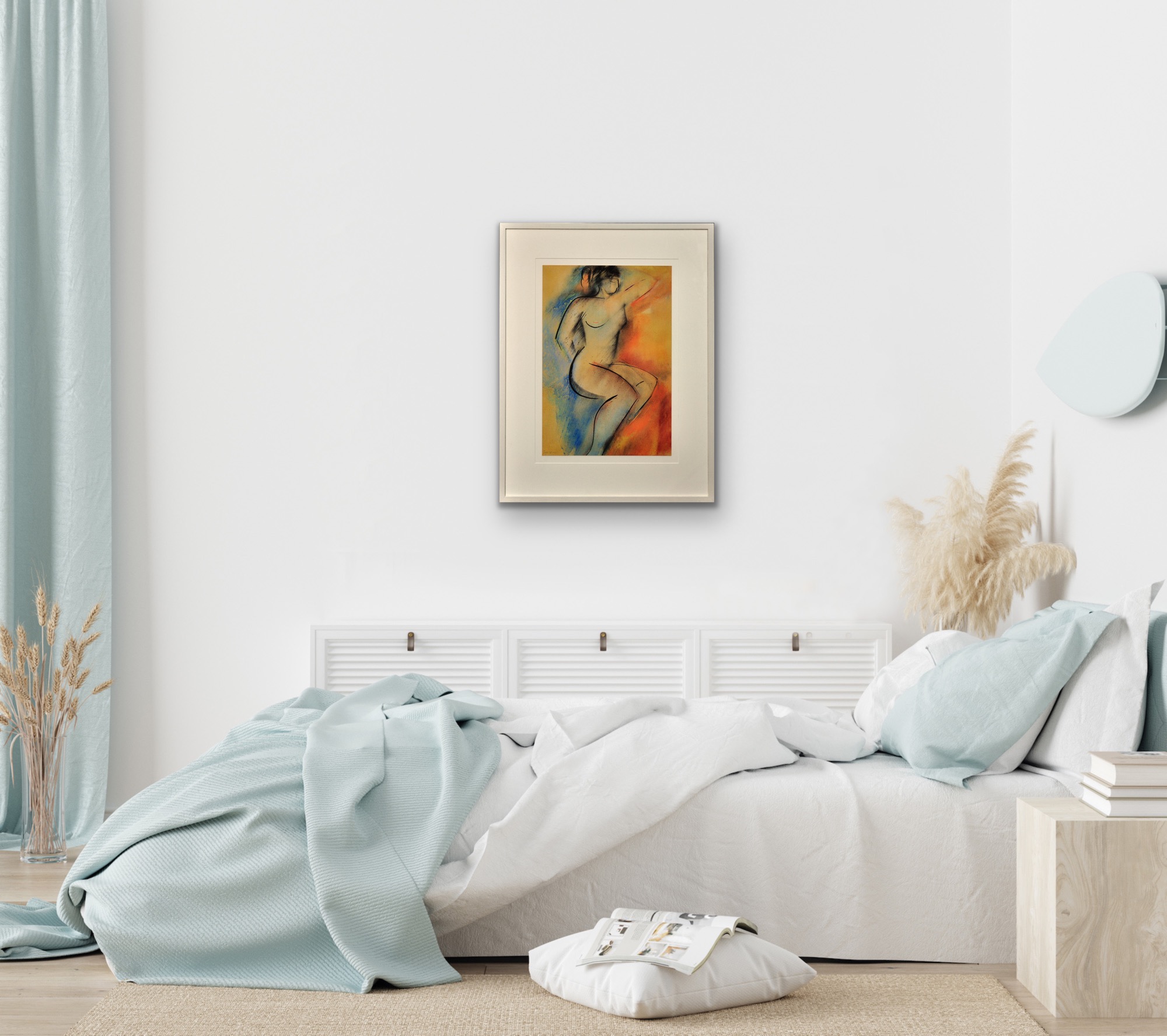
Descend
| Image size | 20.9 inches x 14 inches ( 53cm x 35.5cm ) |
| Frame size | 30.9 inches x 23.6 inches ( 78.5cm x 60cm ) |
£1,295.00
Available for sale from Big Sky Fine Art in the English county of Dorset, this original figurative mixed media artwork is by the English artist Mary Stork and is dated 28th January 2003.
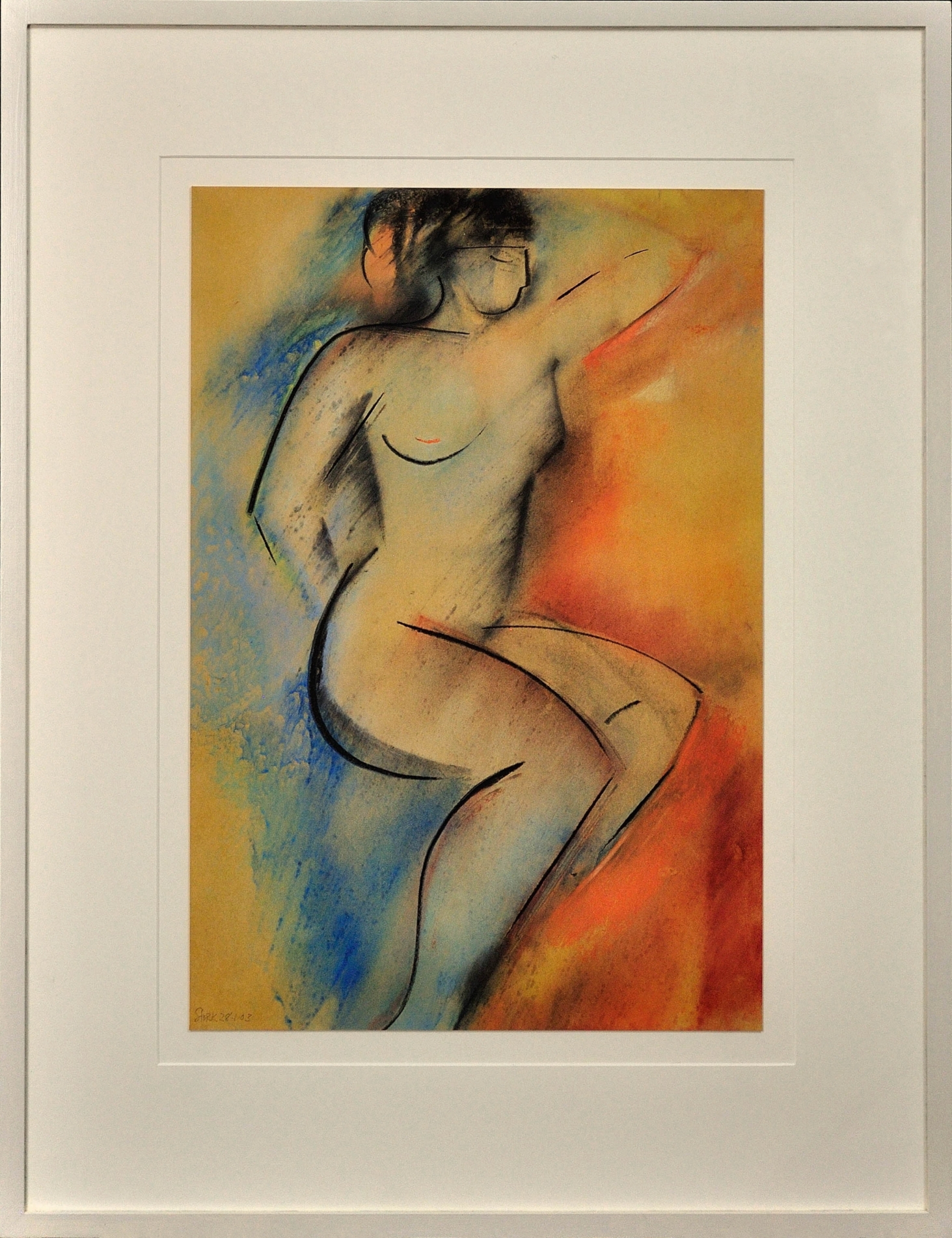
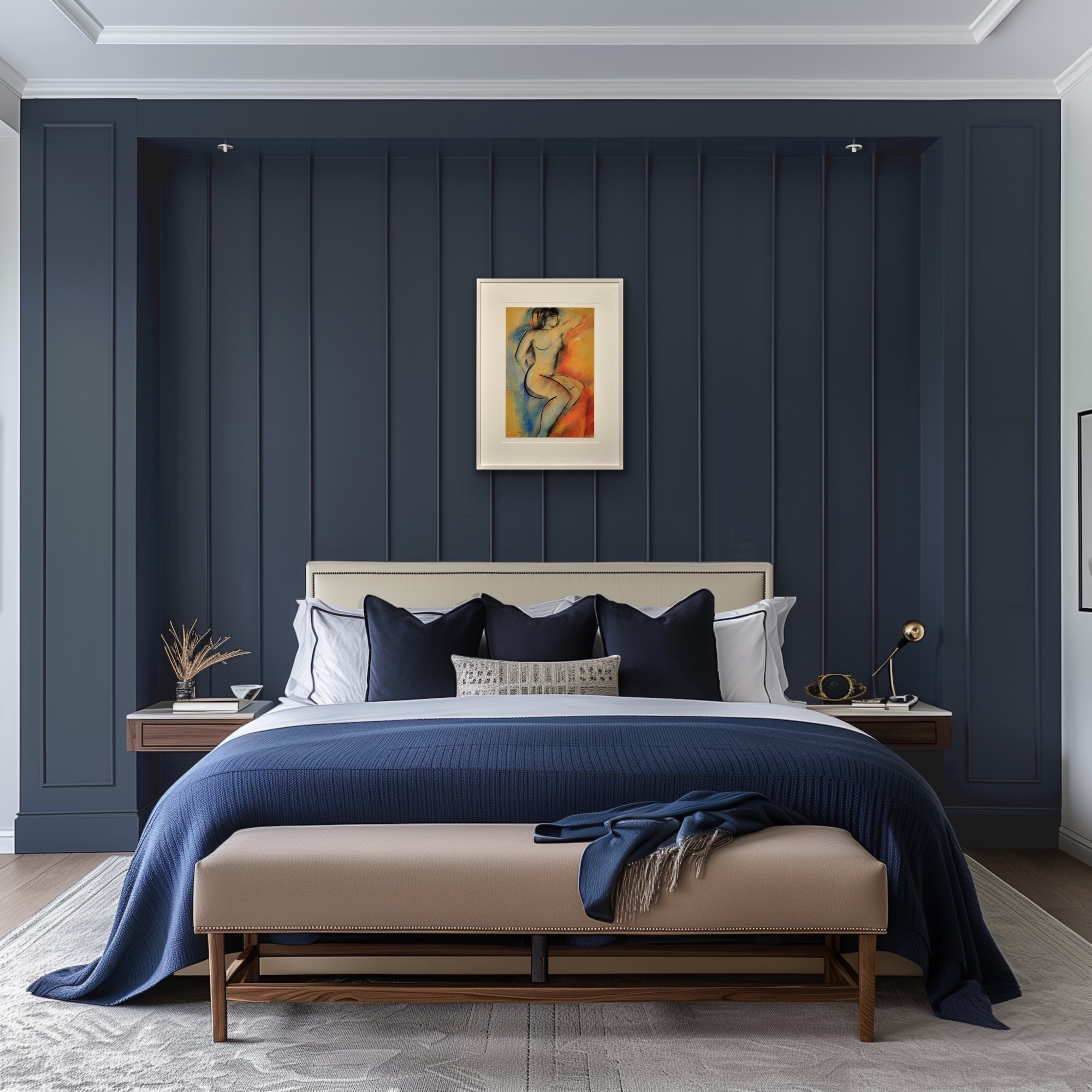
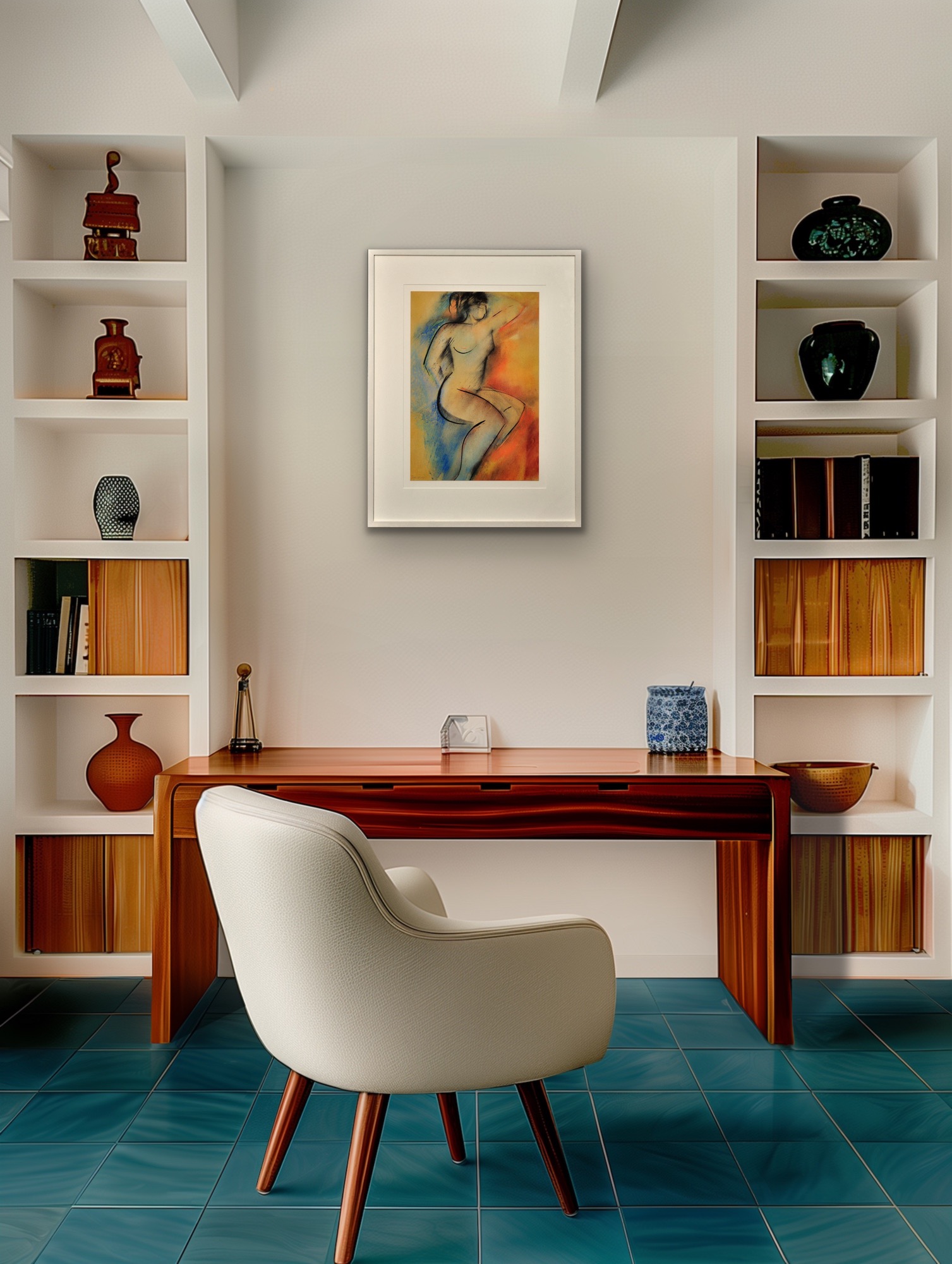
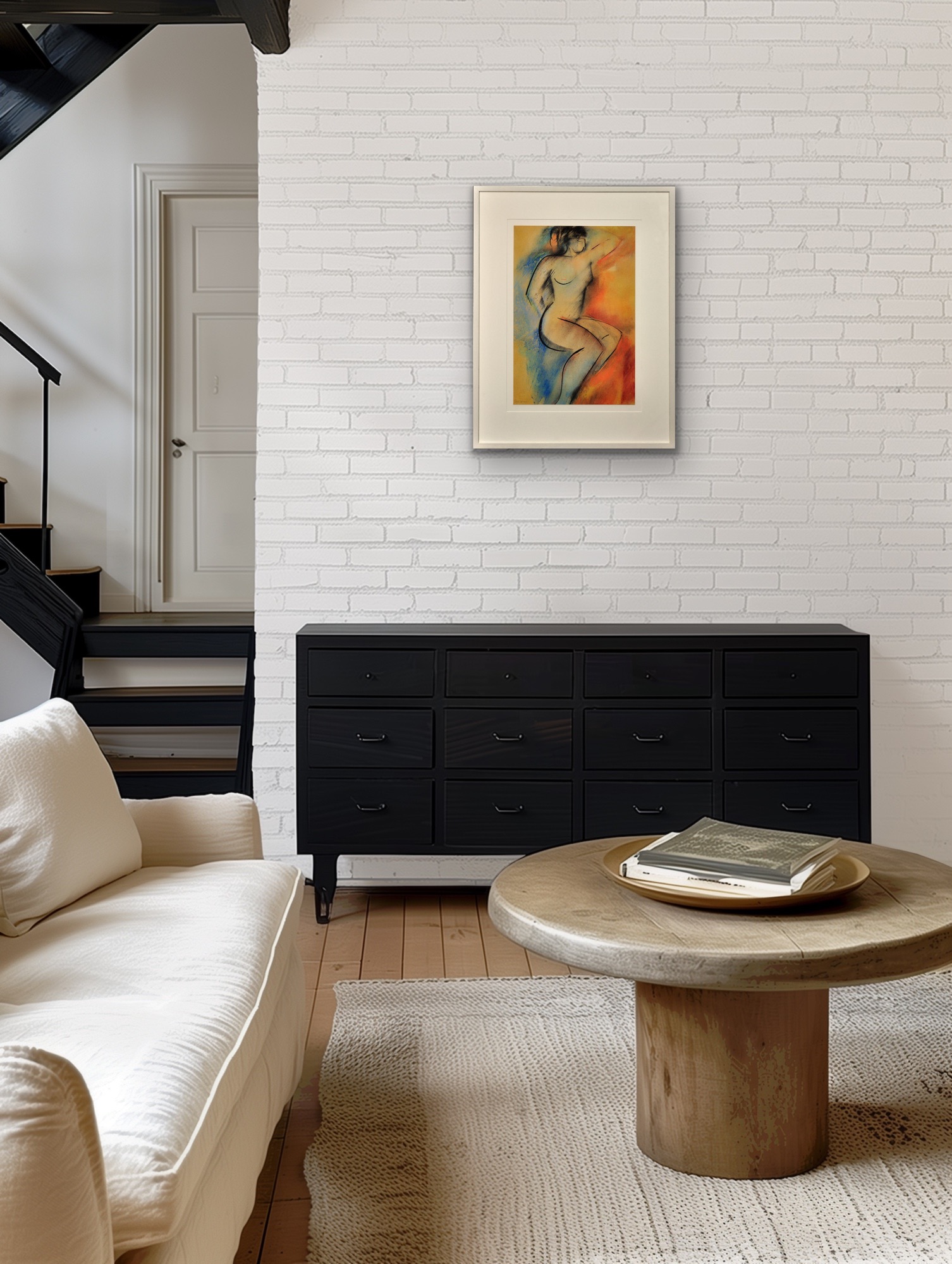
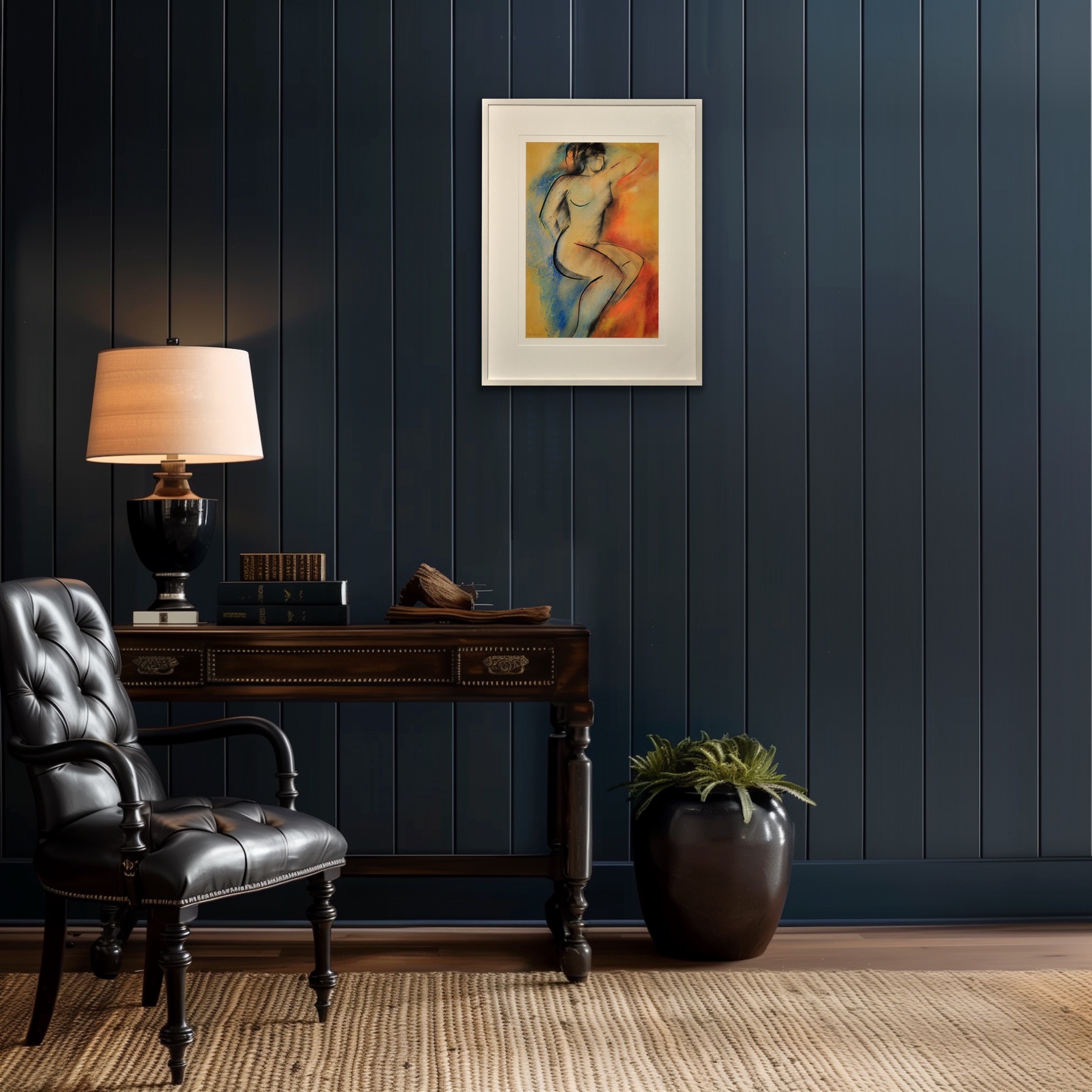
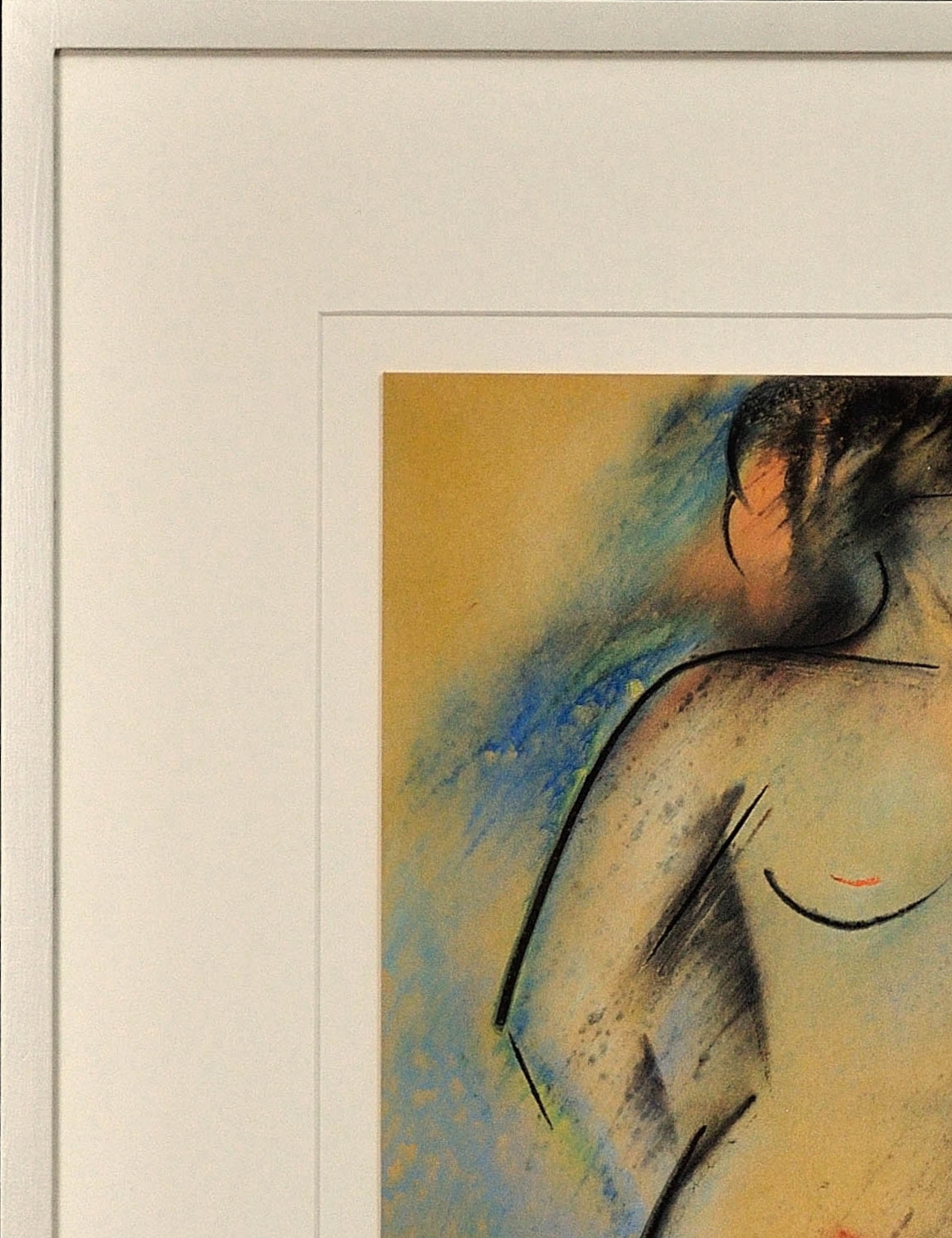
The artwork is presented and supplied in its original frame (which is shown in these photographs), mounted behind glass.
This vintage artwork is in very good condition; it wants for nothing and is ready to hang and display.
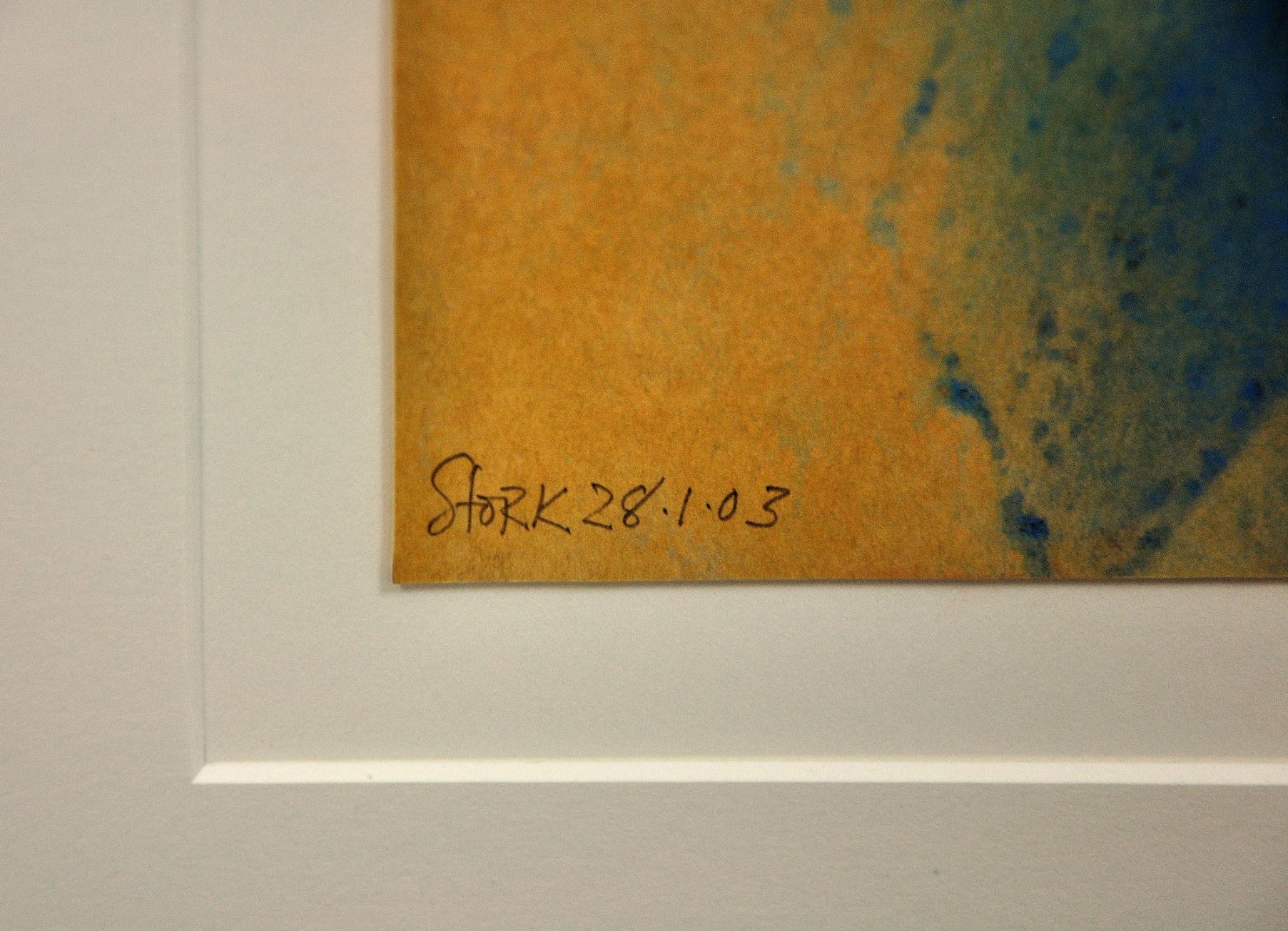
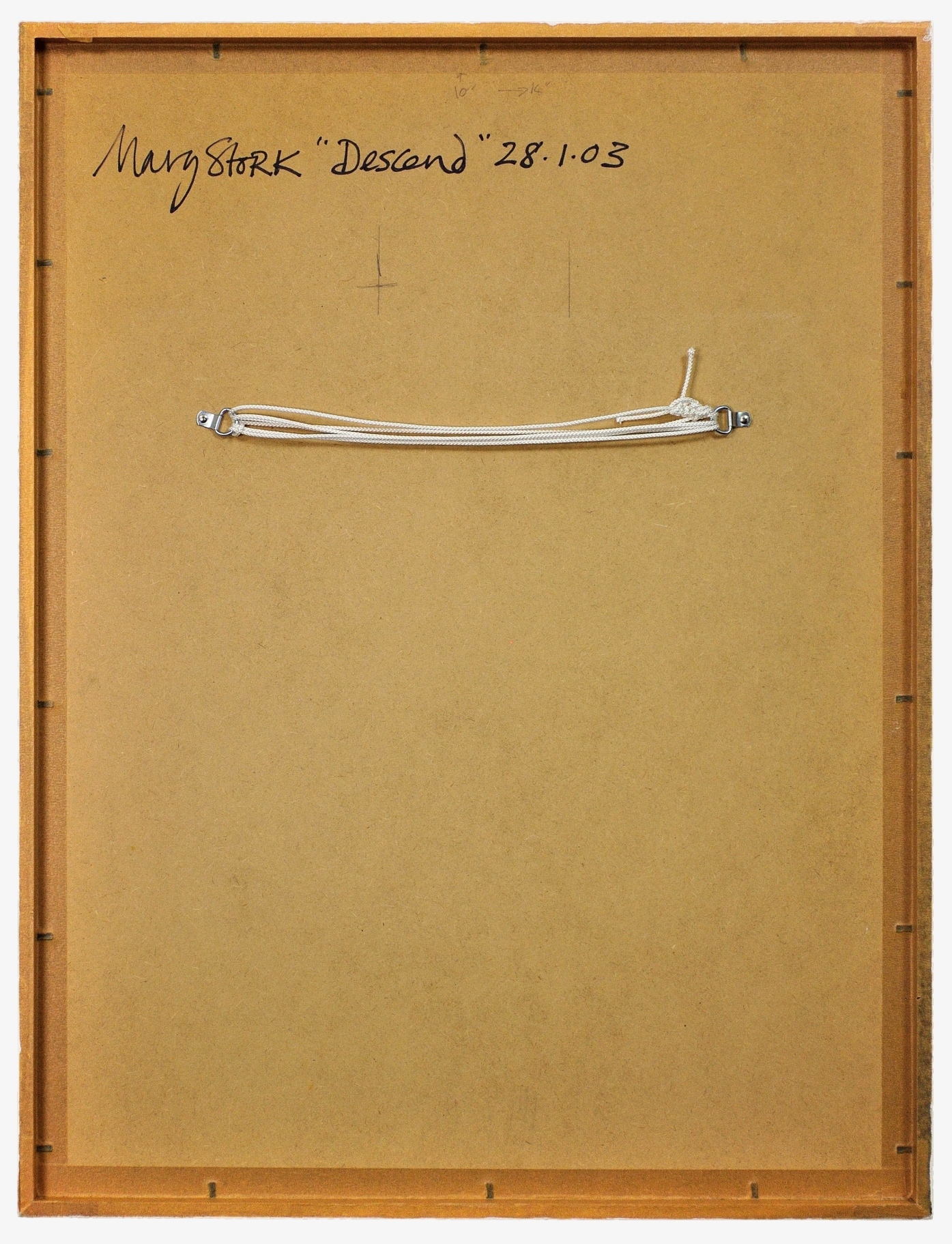
The artwork is signed and dated 28.1.03 lower left and again on the reverse along with the title.
Mary Stork was a British painter and draughtswoman best known for her distinctive studies of the human figure, generally executed in mixed media on paper. Closely associated with the artistic community of West Cornwall, she developed a highly individual figurative language in which economical, expressive line was combined with passages of watercolour, charcoal and other media. Although firmly rooted in observational drawing and the traditions of classical draughtsmanship, her work has a distinctly modern sensibility, often reducing the figure to its essential contours and gestures.
Stork was born in Portsmouth in 1938 and spent part of her childhood in Dartmouth, Devon, where her father was Director of Studies at the Royal Naval College. She studied at the West of England College of Art in Bristol, where Paul Feiler was an important tutor, before continuing her training at the Slade School of Fine Art in London. She received awards while at the Slade and achieved early recognition when her work was selected for the Arts Council’s Young Contemporaries touring exhibition. She also exhibited with the London Group in 1959, 1960 and 1961.
At the Slade she met the Cornish painter Jeremy Le Grice, whom she subsequently married. In 1961 they settled at St Just-in-Penwith, placing Stork within one of the most fertile artistic communities in post-war Britain. The far west of Cornwall had attracted successive generations of artists, and Stork became acquainted with a number of important figures working there. Among them was the German-born painter Karl Weschke, whose influence upon her work she later acknowledged.
She also formed a particularly close friendship with Rose Hilton. Roger and Rose Hilton moved to Botallack, near St Just, in the mid-1960s, and Stork and Rose Hilton shared the experience of having their own artistic careers interrupted by the demands of family life. For Stork, this resulted in an extended period during the 1970s in which painting largely gave way to raising her family.
Following the breakdown of her first marriage, Stork remarried and lived for a period in Porthleven. By the early 1980s she had returned seriously to painting and began once again to exhibit, initially through smaller Cornish galleries including the Rainyday Gallery in Penzance. Her re-emergence as a practising artist developed into a sustained second phase of her career.
Stork became a member of both the Penwith Society of Arts and the Newlyn Society of Artists, organisations which continued the long-established traditions of the artistic communities of St Ives and Newlyn. Her work was exhibited regularly in Cornwall and elsewhere in Britain. Exhibitions included those at Newlyn Art Gallery, the Penwith Gallery and Beaux Arts in Bath, while in 1994 she was included in Three Painters from Penwith at David Messum Fine Art in Cork Street, London. She also exhibited at the Royal West of England Academy, maintaining a connection with Bristol where her formal artistic education had begun.
The human figure remained at the heart of Stork’s mature work. Her drawings and paintings are characterised by a strong linear quality: bodies are described with remarkably few marks, sometimes with little or no facial detail, while charcoal, watercolour and other media provide areas of colour, shadow and atmosphere. The apparent simplicity of these works depends upon considerable draughtsmanship. A shoulder, hip or limb may be established by a single sweeping line, allowing the pose and physical weight of the sitter to emerge without elaborate modelling.
This economy gives Stork’s figures a quality that is at once intimate and anonymous. Individual identity is frequently subordinate to posture, movement and the relationship of the body to the surrounding space. In many works the loosely applied colour around the figure approaches abstraction, creating a productive tension between the disciplined line of the drawing and the freer handling of the surrounding surface.
Following the death of her second husband, Stork returned to St Just and later moved to central Penzance, where she continued to work. She remained closely connected with the West Cornwall artistic community and produced a substantial body of figurative work during the later decades of her life.
Mary Stork died in 2007. Her work occupies an interesting position within the later history of the Cornish school: belonging to a generation exposed to the powerful legacy of post-war modernism in St Ives, yet retaining the human figure as its principal subject. Her best works combine the discipline of traditional draughtsmanship with the freedom and expressive economy of modern British painting.
© Big Sky Fine Art
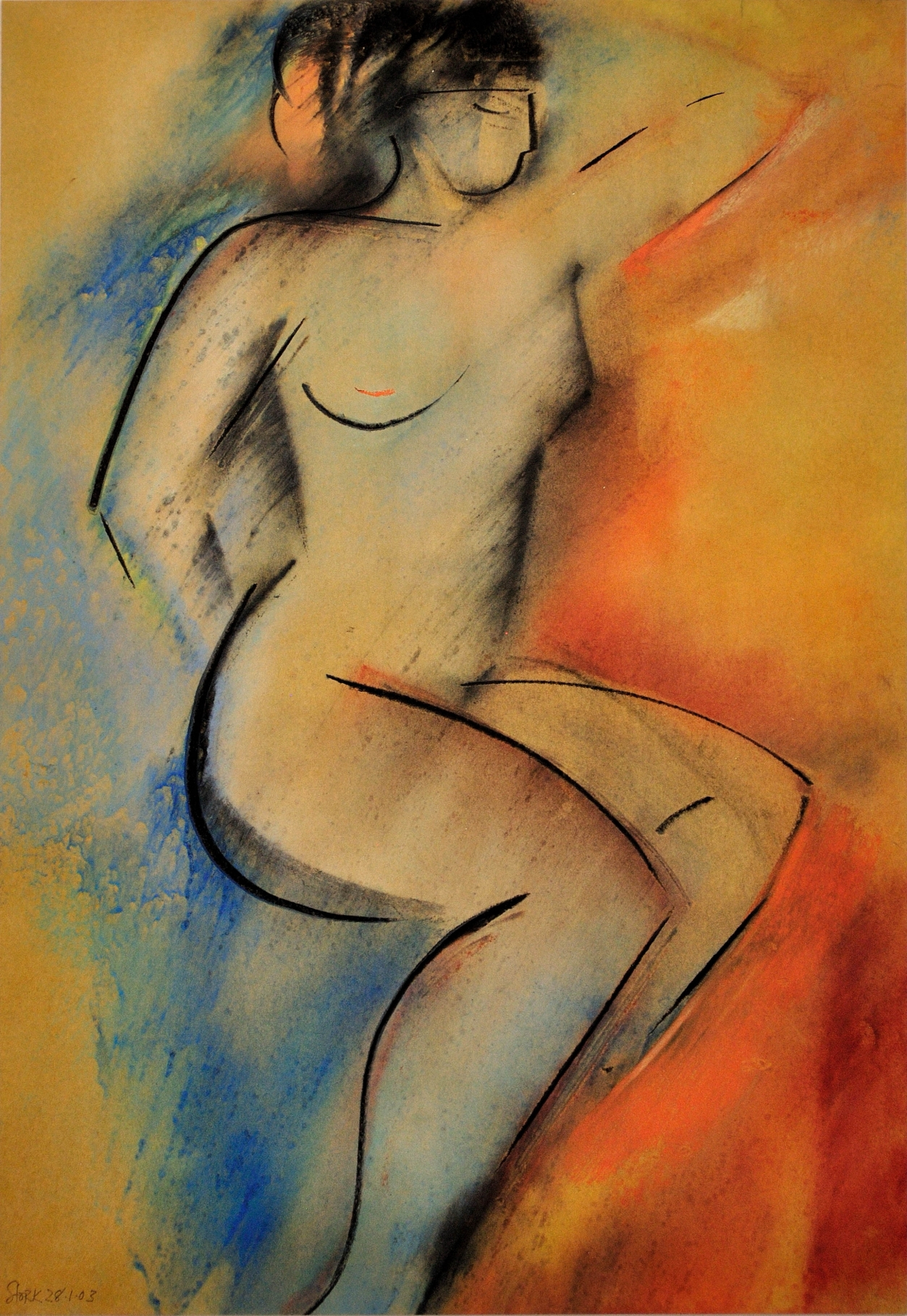
An expressive original mixed-media work on paper by the English artist Mary Stork (1938–2007), depicting a seated female nude. Entitled “Descend”, the work is signed and dated 28.1.03 in the lower left and is further signed, titled and dated by the artist verso.
Stork presents the female figure with remarkable economy of line. The softly modelled body is defined by sweeping charcoal-like contours and delicate passages of shading, while the face is deliberately left almost featureless. Rather than concentrating upon individual identity, the artist focuses upon the physical presence of the figure: the curve of the shoulder and breast, the weight of the torso and the strong diagonal created by the bent leg.
The restrained drawing of the nude is set against a much more expressive field of colour. Warm ochre, orange and red tones dominate the composition, contrasting with areas of vivid blue and cooler grey-blue surrounding the figure. These loosely worked passages of pigment give the surface an atmospheric, almost abstract quality and create a striking sense of warmth, movement and depth around the body.
There is an appealing tension between figuration and abstraction in “Descend”. Stork’s assured linear drawing establishes the human form with relatively few marks, while colour is allowed considerably greater freedom. The result is intimate and contemplative without being conventionally representational: a modern treatment of the female nude in which gesture, line and colour are as important as anatomical detail.
Created in 2003, “Descend” is an accomplished example of Mary Stork’s figurative work and would particularly appeal to collectors of British Modern and contemporary art, female nude studies, figurative drawing and original mixed-media works on paper.
 Descend - Stork, Mary