









Samuel Dennis Walley Timmins
English ( B.1900 - d.1951 )
A Running Stream In The Welsh Marches, 1932
| Image size | 13.6 inches x 9.6 inches ( 34.5cm x 24.5cm ) |
| Frame size | 18.1 inches x 14.2 inches ( 46cm x 36cm ) |
£1,295.00
Available for sale from Big Sky Fine Art in the English county of Dorset, this original Art Deco painting is by the architect and artist Samuel Timmins and is dated 1932.
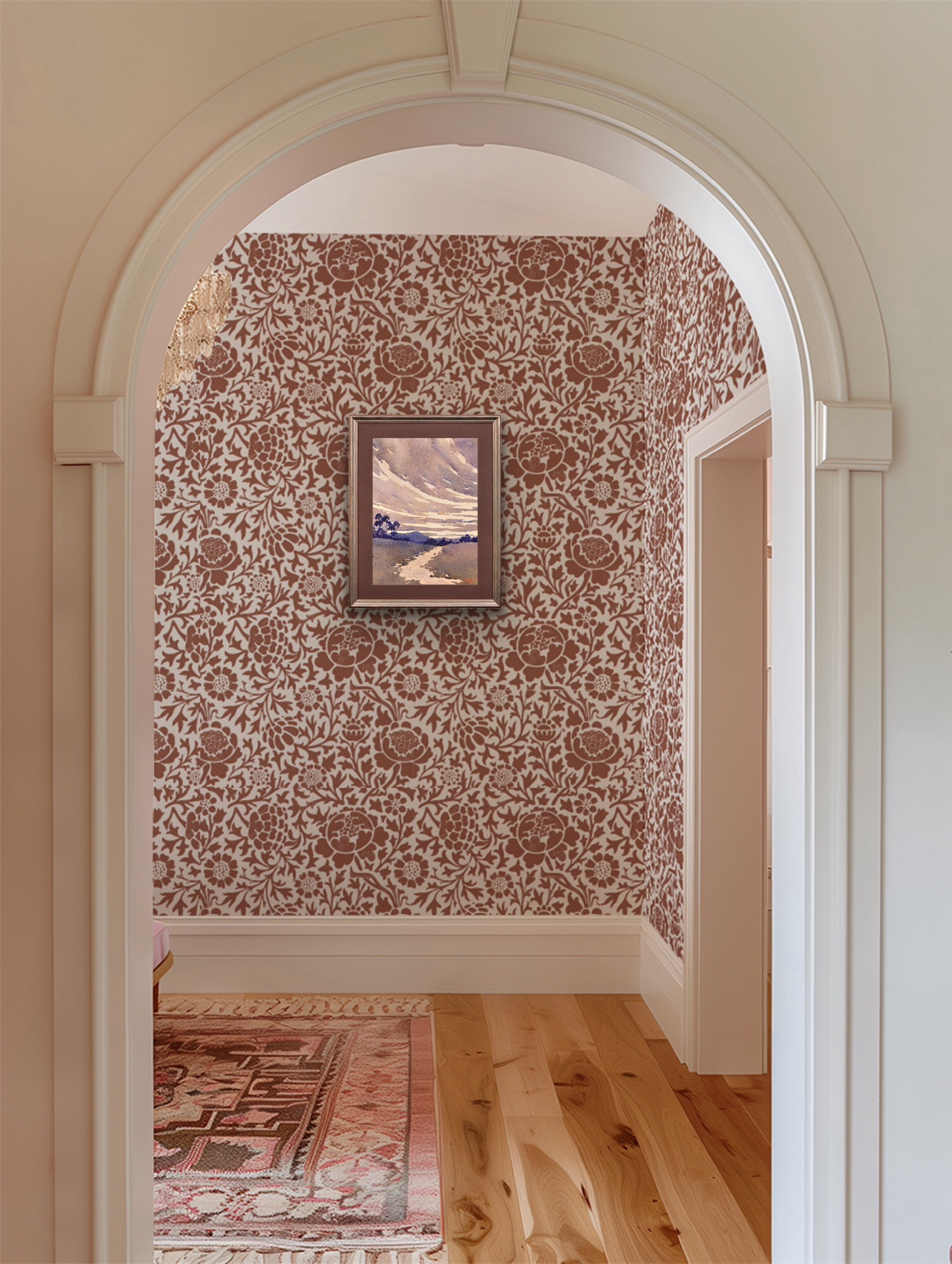
The watercolour is presented and supplied in a sympathetic contemporary frame (which is shown in these photographs), mounted using conservation materials and behind non-reflective Tru Vue UltraVue® UV70 glass.
This antique painting is in very good condition, commensurate with its age. Now mounted with conservation materials it wants for nothing and is ready to hang and display.
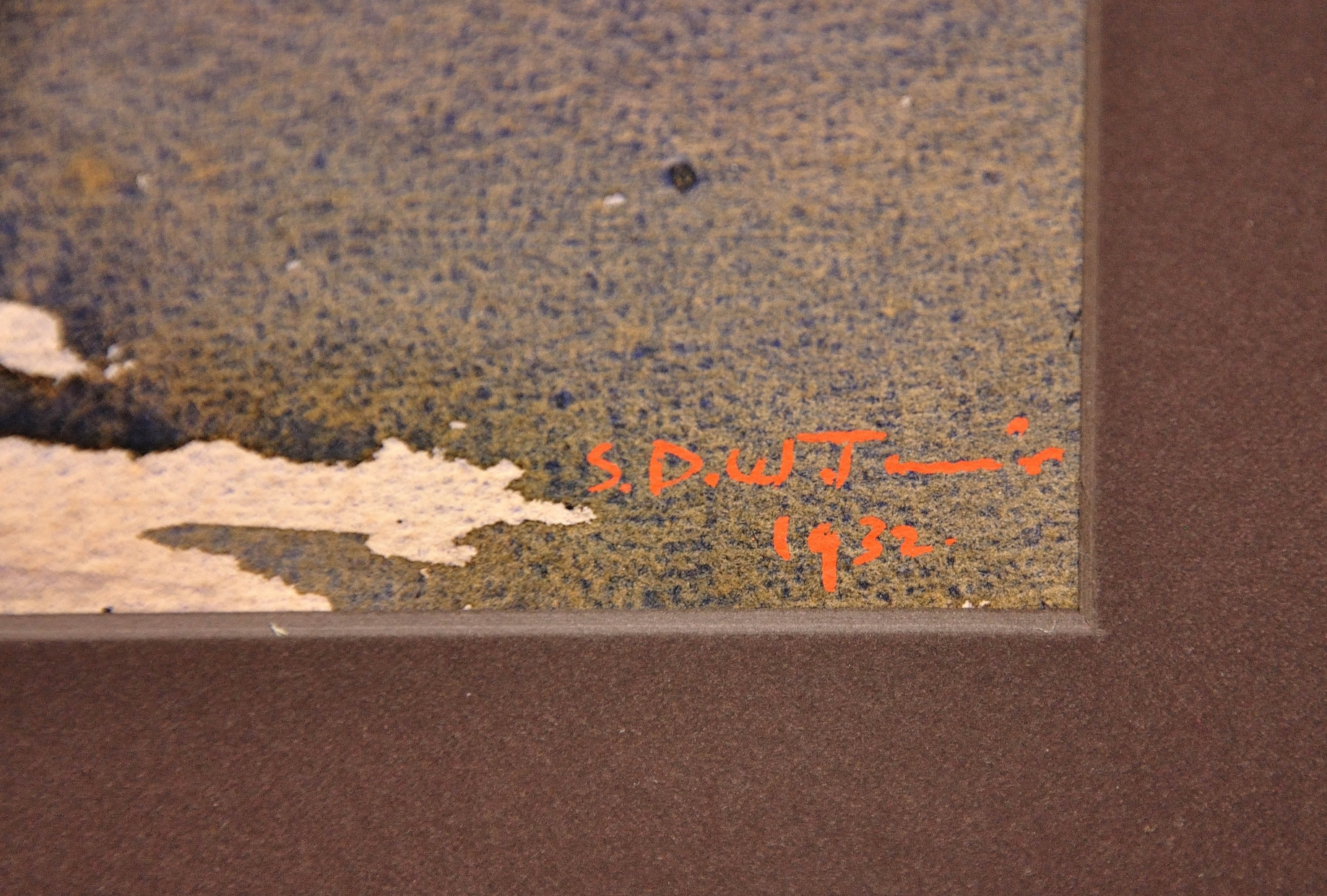
The watercolour is signed and dated 1932 lower right.
Samuel Timmins was born in Walsall, Staffordshire, England on 23 October 1900. His parents were Dennis Timmins and Lizzie (Wootton). He was a cadet with the Royal Flying Corps between 1914 and 1922.
Timmins had a strong sense of design and style which led him to train as an architect. He was elected a Licentiate of the Royal Institute of British Architects in 1932. He lived and practised in the Wolverhampton and Staffordshire region throughout his career.
The expansion of private housing was a key theme of inter-war Britain and Timmins played his part in this. His designs however were not of the mundane or mass production model, and hence a number of the buildings he designed survive and some are now listed. Examples include the private residence of St Jude’s Court on Tettenhall Road in Wolverhampton, designed in 1934, which was the home of Major Frank Buckley, the famed Wolverhampton Wanderers’ manager. Compton Court in Wolverhampton is an example of a block of flats designed by Timmins, not utilitarian in the least, set back from the road and showing strong geometrical design, and including interior art deco features. A bungalow designed by him in Wolverhampton is discussed in Seaside Houses and Bungalows, edited by Ella Carter, published in 1937. Timmins was also commissioned to design some public buildings, including Springate Methodist Church and Community Centre, which became well used and much loved.
Timmins married in 1927 to Katherine Butcher, and later in 1936 to Vera Dumbell. He died in Wolverhampton, Staffordshire on 17 October 1951. His address at the time of his death was 2 Claregate, Tettenhall, Staffordshire.
In addition to his work as an architect, Timmins was also a respected local artist. He exhibited at the Royal Birmingham Society of Artists between 1921 and 1936. His impressionist watercolour paintings demonstrate his innate style and confidence as a colourist.
© Big Sky Fine Art
This atmospheric original 1932 watercolour by English artist Samuel Dennis Walley Timmins (1900–1951) is titled “A Running Stream in the Welsh Marches.” The painting is signed and dated in the lower right corner, confirming its authenticity.
The composition captures the quiet beauty of the Welsh Marches landscape, with a winding stream leading the eye through open countryside towards distant hills. Bold silhouettes of trees and ridges contrast against a dramatic sky, painted in sweeping bands of violet, lavender, and muted gold. Timmins’s use of colour and simplified forms creates a powerful sense of rhythm and atmosphere, evoking the timeless character of the borderlands between England and Wales.
This is a fine example of interwar British landscape watercolour painting, ideal for collectors of English watercolours, Welsh landscape art, or works by regional artists of the 1930s. With its striking balance of architectural clarity and painterly freedom, this rare piece embodies the spirit of the countryside in the early 20th century.
 A Running Stream In The Welsh Marches, 1932 - Timmins, Samuel